Context
I work on an enterprise digital asset management product. For a long time, the product work focused on serving the customers we already had, making the product easier to live with. Then the business shifted. In the AI era, bringing in new customers became the primary job. New acquisitions were the priority, because AI changed how quickly a decent competitor could improve their own product.
The obvious place to look was onboarding, as that is where the product was lacking, and that is where the sales pipeline actually starts.
We already had the research: interviews, win/loss data, customer notes, competitor work, and the old personas. I had already built an agentic system that could run against that material. A new frontier model opened the door, giving me a way to combine those research methods and agents to build the right design for the job.
Persona
The personas we had were outdated, describing people who might use the product rather than the person who decides to buy it. In this case, the decision-maker is a senior technical buyer.
I built an agentic research system around a frontier model, utilizing multiple agents to handle different jobs at once. It looked at internal evidence, web research, persona authors, the existing design, wireframes, a sample project, and the asset sourcing for that sample project. Each agent ran on a different model tier, scaled to what the specific job needed and what the token spend was worth.
| Agent | Description |
|---|---|
| Internal evidence | Read the company’s own written record: competitive guides, customer notes, discovery scans, win/loss data, and sales material. |
| Web research | Job postings, practitioner interviews, industry surveys, outsourcing, and review-workflow guides. |
| Persona author | Wrote a buying persona for the decision-maker, with a citation on every claim. |
| Existing design | Reviewed the live onboarding and wireframes from the buyer’s perspective, listing what had to change. |
| Sample project | Folder and bundle structure for a demo project a buyer could explore. |
| Asset sourcing | Where demo art comes from, and the licensing constraints on each route. |
| Competitor analysis | A capability matrix across major competitors. |
The matrix itself is confidential. The takeaway was that we needed a trial experience where someone could see the full capability of the product, bypassing the lengthy configuration that typically comes with legacy enterprise software in this sector.
Design
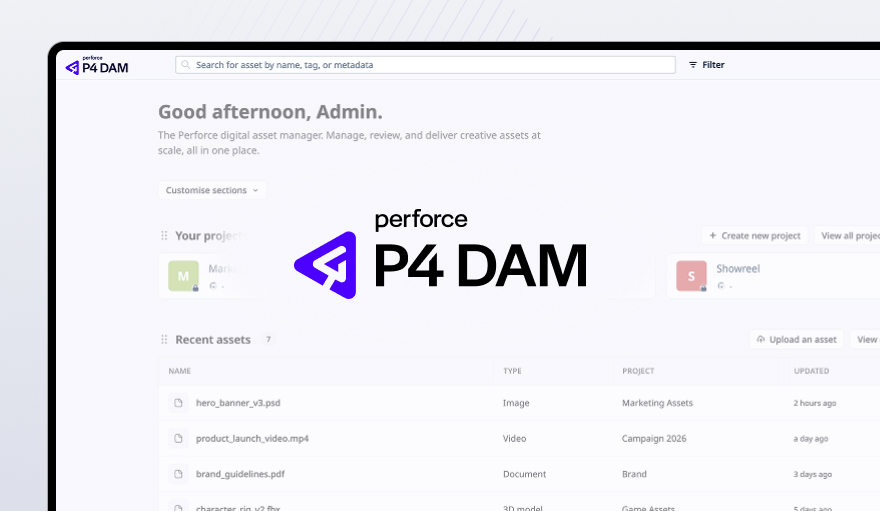
The new design was built using a custom AI workflow plugin I designed. It pulls from a lot of sources, including a design-system integration with the components, the layout rules, and the branding. It takes that context, combined with the evidence and the output from the AI workflow, and turns it into a generated UI.
It is expensive to run, but if the context is good enough, the output needs very few tweaks and is almost ready to go once the workflow finishes.
It makes the self-serve impression far more meaningful, and it is needed.
It made the job a lot easier, and opened up conversations we did not have a way into before.
The quotes are paraphrased from a sales call and reviewed for accuracy.
Outcome
Sales now has a persona-driven trial experience. Prospects see the product through the work they care about, giving sellers a credible place to send someone after a first demo call. Sales opportunities increased, and the sales team reported that it made their job a lot easier.
The bigger part of it is the workflow itself. A frontier model, agents, AI coding tools, server integrations, a design system, and a custom workflow plugin were used together to generate UI that directly increased sales.